Key Types of Corporate Training Programmes Every Business Should Know
Corporate training has evolved far beyond the dreary, tick-box exercises that employees once endured at annual away days. In the modern business landscape, structured workforce development is a genuine strategic lever — one that sharpens skills, mitigates risk, strengthens staff loyalty and delivers quantifiable returns. Organisations that treat training as an afterthought increasingly find themselves outpaced by competitors who weave learning into the fabric of everyday operations.
But with so many programme types available, where should a business focus its energy and budget? Below, we explore the most important categories of corporate training that every organisation — regardless of size or sector — should understand and consider implementing.
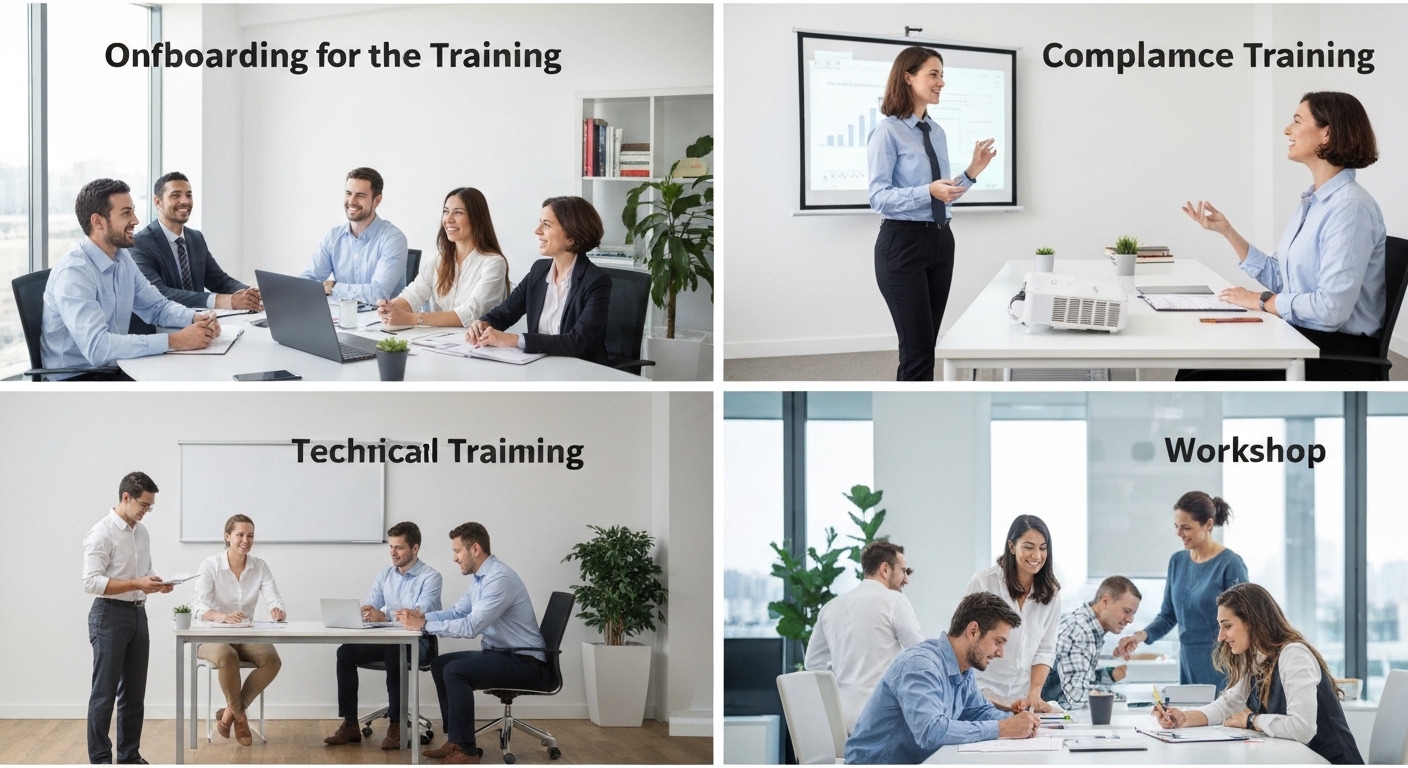
1. Onboarding and Induction Training
First impressions matter enormously. A robust onboarding programme does far more than show new hires where the kitchen is; it immerses them in company culture, clarifies role expectations and accelerates the journey to full productivity. Research consistently shows that employees who experience a structured induction are significantly more likely to remain with the organisation beyond their first year.
Effective onboarding might include a blend of e-learning modules covering company policies, mentorship pairings, and hands-on task shadowing. For example, a mid-sized logistics firm could pair each new warehouse operative with an experienced team leader for the first fortnight, supplementing that with digital modules on health and safety procedures. The result is a confident employee who contributes meaningfully from the outset.
2. Compliance and Regulatory Training
Every industry operates within a framework of legal and regulatory obligations — from GDPR in data handling to sector-specific requirements in healthcare, finance or construction. Compliance training ensures that staff understand these obligations and act accordingly, protecting both the organisation and its clients from costly breaches.
Crucially, compliance training should never be a once-a-year formality. Regulations change, and so should the learning that supports them. The most effective programmes use short, regularly updated modules delivered through a learning management system (LMS), making it straightforward to track completion rates and identify gaps before they become liabilities.
3. Technical and Role-Specific Skills Training
The pace of technological change means that many technical competencies now have a shelf life of just two to three years. Whether it involves mastering new software platforms, understanding data analytics tools, or staying current with evolving engineering standards, technical skills training keeps employees capable and confident in their day-to-day responsibilities.
Consider a marketing team transitioning to a new customer relationship management (CRM) system. Without targeted training, adoption will be patchy, data quality will suffer, and the investment in the platform will be largely wasted. A structured programme — combining instructor-led workshops with on-demand video tutorials — can dramatically improve uptake and return on investment.
4. Leadership and Management Development
Strong leadership doesn't simply emerge by promoting the most experienced individual contributor. Managing people requires an entirely different skill set: emotional intelligence, strategic thinking, conflict resolution and the ability to coach others. Leadership development programmes cultivate these capabilities deliberately.
Organisations that invest in leadership pipelines are better positioned to navigate disruption, retain high performers and maintain cultural cohesion — particularly when managing hybrid or geographically dispersed teams.
These programmes often blend formal learning (such as workshops on delegation or performance management) with experiential elements like action-learning projects, 360-degree feedback and executive coaching. The key is to start early — emerging leaders benefit most when development begins well before they assume senior roles.
5. Professional and Soft Skills Development
Communication, time management, critical thinking, collaboration — these so-called "soft" skills are anything but optional. They underpin virtually every interaction in the workplace and are frequently cited by employers as among the hardest competencies to recruit for. Dedicated professional development programmes address this gap by helping employees at all levels refine interpersonal and organisational abilities.
A practical example: a financial services company might run quarterly workshops on presentation skills and persuasive writing, enabling analysts to communicate complex findings to non-specialist stakeholders with greater clarity and impact.
6. Customer Service Training
For customer-facing organisations, service quality is a direct driver of revenue and reputation. Customer service training equips frontline staff with the techniques to handle enquiries efficiently, de-escalate complaints and create positive experiences that foster loyalty. In retail and hospitality especially, the difference between a well-trained team and an untrained one is immediately visible in customer satisfaction scores and repeat business.
Choosing the Right Approach
No single delivery format suits every situation. The most effective training strategies blend multiple methods — live workshops for interactive skill-building, e-learning for flexible self-paced study, and on-the-job coaching for real-world application. Equally important is measurement: tracking completion rates, assessing knowledge retention and linking training outcomes to business metrics such as productivity, error rates or employee turnover.
- Align programmes with strategic goals — training should address genuine business needs, not simply fill a calendar.
- Offer flexible delivery — accommodate different learning styles and working patterns through blended formats.
- Measure and iterate — use data to evaluate effectiveness and continuously refine content.
- Secure leadership buy-in — visible support from senior management signals that development is valued across the organisation.
Ultimately, corporate training is not an expense to be minimised but an investment to be optimised. Organisations that commit to structured, ongoing development build workforces that are not only more skilled but also more engaged, adaptable and resilient — precisely the qualities needed to thrive in a rapidly shifting business environment.
Source: pryor.com