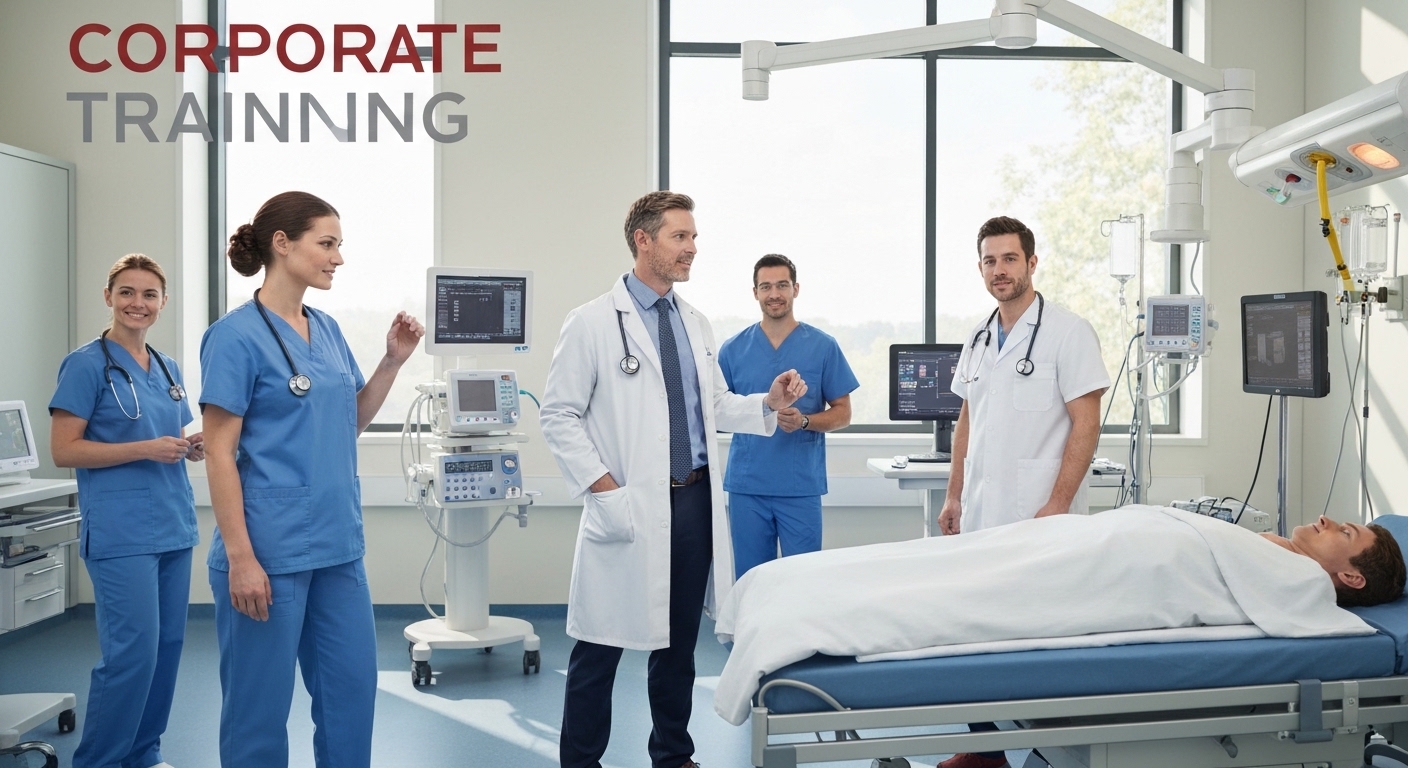
Corporate Training in Healthcare: Industry-Specific Applications and Challenges
Healthcare is one of the most heavily regulated and rapidly evolving sectors in any economy. From frontline nurses and surgeons to administrative staff and laboratory technicians, every role carries weighty responsibilities — often with patient safety hanging in the balance. It is no surprise, then, that corporate training in healthcare demands a level of rigour, specificity, and ongoing commitment that few other industries can match.
Why Healthcare Training Differs from Other Sectors
In many industries, a poorly trained employee might cause a dip in customer satisfaction or a minor financial loss. In healthcare, the consequences of inadequate training can be catastrophic: misdiagnosed conditions, medication errors, hospital-acquired infections, or breaches of sensitive patient data. This reality shapes every aspect of how training programmes are designed, delivered, and evaluated within the sector.
Healthcare organisations must also contend with an unusually broad spectrum of training needs. A single hospital trust, for instance, might need to run clinical skills workshops for theatre staff, data protection courses for receptionists, leadership development for department heads, and mental health resilience sessions for paramedics — all simultaneously. The sheer diversity of roles and competencies required makes a one-size-fits-all approach virtually impossible.
Regulatory Compliance: The Non-Negotiable Foundation
Compliance training sits at the heart of healthcare workforce development. Legislation such as the Health and Social Care Act in the United Kingdom, along with frameworks like the Care Quality Commission (CQC) standards, imposes strict requirements on what staff must know and how often they must refresh that knowledge. In the United States, HIPAA (the Health Insurance Portability and Accountability Act) governs patient data privacy, while OSHA regulations address workplace safety — both demanding regular, documented training cycles.
Research from the Society for Human Resource Management and the U.S. Chamber of Commerce indicates that nearly two-thirds of organisations see measurable return on investment from skills-based training, and a similar proportion report that such training directly addresses costly skills gaps. In healthcare, these figures carry particular weight: a compliance failure can result not only in financial penalties but in the revocation of operating licences and, most critically, in harm to patients.
Compliance training in healthcare is not simply a box-ticking exercise. It is the structural foundation upon which patient trust, clinical excellence, and organisational survival are built.
Key Training Categories in Healthcare Settings
- Clinical skills and continuing professional development (CPD): Clinicians are required to maintain and update their competencies throughout their careers. Simulation labs, case-based learning, and peer-led workshops are common delivery methods.
- Onboarding and orientation: New starters in healthcare face steep learning curves. Effective onboarding goes well beyond a brief induction — it may span several months, incorporating mentorship, supervised practice, and structured goal-setting with line managers.
- Health and safety training: Manual handling, infection prevention and control, fire safety, and the correct use of personal protective equipment are recurring themes. The COVID-19 pandemic underscored just how vital this category remains.
- Data protection and information governance: With electronic health records now standard, every member of staff who accesses patient information must understand their legal and ethical obligations.
- Leadership and management development: As healthcare systems face mounting pressures — from staffing shortages to budget constraints — investing in capable leaders has become a strategic priority rather than a luxury.
Persistent Challenges
Despite widespread recognition of its importance, healthcare training faces several stubborn obstacles. Perhaps the most significant is time. Clinical staff work demanding shift patterns, and releasing them for training without compromising patient care requires careful rota planning and, often, additional temporary staffing costs.
Engagement presents another hurdle. Mandatory e-learning modules — frequently used for compliance topics — can feel repetitive and disconnected from daily practice. LinkedIn Learning data suggests that eight in ten employees find that learning gives purpose to their work, yet this sense of purpose is easily eroded when training feels like an administrative chore rather than a genuine development opportunity.
There is also the challenge of measurement. Tracking completion rates is straightforward; demonstrating that training has actually changed behaviour on the ward or in the clinic is far more complex. Progressive organisations are beginning to link training outcomes to patient safety metrics, staff retention figures, and incident reporting data to build a clearer picture of impact.
Looking Ahead: Technology and Personalisation
Emerging technologies are beginning to reshape healthcare training. Virtual reality simulations allow surgical trainees to practise procedures in risk-free environments. Artificial intelligence can personalise learning pathways based on an individual's role, experience level, and identified knowledge gaps. Mobile-first platforms enable staff to complete micro-learning modules during quieter moments on shift, reducing the need for lengthy classroom sessions.
However, technology is an enabler, not a replacement for thoughtful programme design. The most effective healthcare training strategies blend digital tools with hands-on practice, peer collaboration, and reflective supervision — ensuring that learning translates into safer, more compassionate patient care.
For healthcare organisations willing to invest strategically, corporate training is not merely a regulatory obligation. It is a powerful lever for improving outcomes, retaining talented staff, and building a culture of continuous improvement in one of the world's most demanding working environments.
Source: phenom.com